PSSSB · PSPCL · Punjab and Haryana High Court

PSSSB English Typing Test 2026

Punjab Subordinate Services Selection Board — Clerk and Senior Assistant typing test practice

QWERTY from the home row up — every key, one step at a time. Build the reach, build the muscle memory, clear the exam.

30 wpmGross speed
92%Min. accuracy
10 minTest time
QWERTYKeyboard
Watch how it works
WPM
22
Accuracy
96%
Subordinate Services Selection Board
tchar
KEYT
Left Indexfinger
~`
`
!1
1
@2
2
#3
3
$4
4
%5
5
^6
6
&7
7
*8
8
(9
9
)0
0
_-
-
+=
=
q
w
e
r
t
y
u
i
o
p
{[
[
}]
]
|\
\
a
s
d
f
g
h
j
k
l
:;
;
"'
'
z
x
c
v
b
n
m
<,
,
>.
.
?/
/
Space
Every rule and figure below follows the official PSSSB document Important Instructions for Candidates regarding Typing Test
Punjab Subordinate Services Selection Board · Advertisement No. 3/2021, Clerk (Legal) · Last updated 2026-07-30
Start typing for real
Pick where you want to begin — lessons, free practice, or the full exam simulation.

PSSSB typing test criteria at a glance

30 WPM
Gross speed
Counted before any error deduction
92%
Minimum accuracy
Maximum 8% mistakes allowed
10 min
Test duration
Per language, separately
1,500+
Characters needed
What 30 WPM works out to
10
Chunks to type
All ten, or you are not eligible
80%
Before Enter works
Of the chunk you are on
5
Characters = 1 word
Spaces and full stops included
5 min
Gap between papers
Between Punjabi and English
Qualifying
Nature of the test
Not added to the merit list
Both gates must be cleared. 45 WPM at 90% accuracy fails. 29 WPM at 100% accuracy also fails. Speed and accuracy are checked separately.

PSSSB typing test rules you must know

01

Mistakes do not slow your speed

Speed counts every character you type. Mistakes only pull down your accuracy score.

02

Type 1,500 characters in 10 minutes

That is 30 WPM. PSSSB treats 5 characters as one word, spaces and full stops included.

03

29.9 WPM is counted as 29

The decimal is cut off, not rounded up. Aim for 1,550 characters to stay clear of the line.

04

Below 92% accuracy you fail

Even at 45 WPM. And at 91% you fail even with good speed. You need to clear both.

05

A wrong or missing word costs 5 characters

This is a full mistake. Skipping a hard word costs more than typing it slowly.

06

A wrong space costs 2.5 characters

This is a half mistake. A missing space, an extra space, or bad spacing near a comma.

07

You must type all 10 chunks

Stop at chunk nine and you have not passed, whatever your speed and accuracy show.

08

Enter works only after 80% of a chunk

Skipped words are penalised. Use it for one hard word, not to jump ahead.

09

Finish first, correct later

Do all ten chunks, then use the time left to fix mistakes. Do not polish as you go.

10

Backspace gives you nothing

It is not counted as a character. Nor are Shift, Alt, extra spaces or extra Enters.

How your PSSSB typing score is calculated
PSSSB does use a full and half mistake system, and the 30 WPM requirement is measured on gross speed, not net. Both are widely stated incorrectly elsewhere.
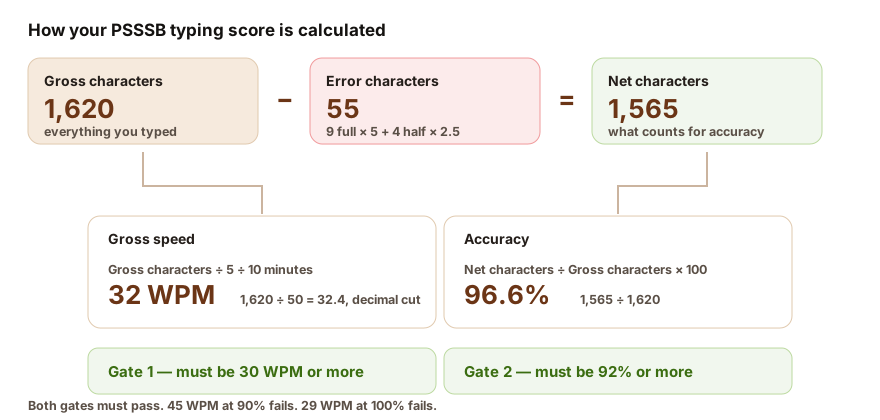
PSSSB typing test scoring formula diagram — gross characters minus error characters gives net characters, with 30 WPM gross speed and 92% accuracy pass gates
Gross characters drive your speed. Net characters drive your accuracy. Both gates are checked independently — clearing one does not compensate for the other.
Full mistake — 5 characters
A word left out, a wrong word typed in its place, or an extra word that is not in the passage.
Half mistake — 2.5 characters
A spacing error: no space between two words, an extra space, or bad spacing around a comma or full stop.
Scoring formula
Gross characters = total number of characters typed
Error characters = number of mistakes × 5  (full = 1, half = 0.5)
Net characters = Gross characters − Error characters
Gross speed (WPM) = Gross characters ÷ (5 × 10 minutes), truncated
Accuracy % = (Net characters ÷ Gross characters) × 100
Pass = Gross speed ≥ 30 AND Accuracy ≥ 92%
A clear pass
Gross characters typed1,620
Full mistakes (9 × 5)45
Half mistakes (4 × 2.5)10
Net characters (1,620 − 55)1,565
Gross speed (32.4, cut)32 WPM
Accuracy (1,565 ÷ 1,620)96.6%
ResultPASS
The truncation trap
Gross characters typed1,495
Total mistakes2 full
Error characters (2 × 5)10
Net characters (1,495 − 10)1,485
Accuracy (1,485 ÷ 1,495)99.3%
Gross speed (29.9, cut)29 WPM
ResultFAIL
Near-perfect accuracy, five characters short on speed.

The 10-chunk system explained

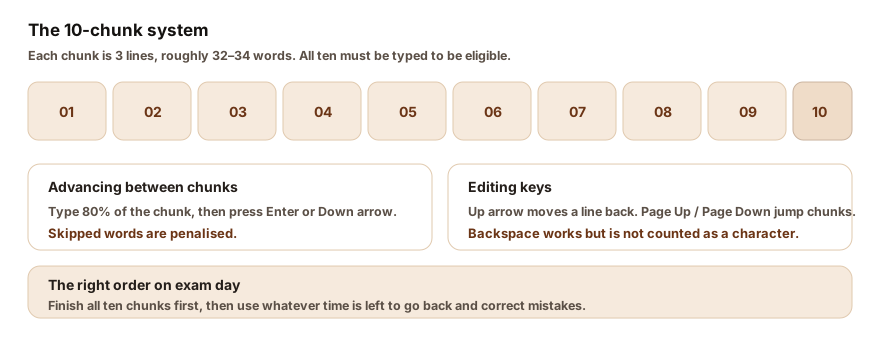
PSSSB typing test 10-chunk system diagram — ten chunks of three lines each, the 80% rule for advancing with Enter, and the available editing keys
All ten chunks must be typed to be eligible. Finish them first, then use the time that is left to go back and correct mistakes.

Full PSSSB English typing test pattern 2026

Conducting bodyPunjab Subordinate Services Selection Board (PSSSB), SAS Nagar (Mohali)
PostsClerk · Clerk (Legal) · Senior Assistant · Steno Typist
ModeOn computer using typing software; evaluated automatically, result shown instantly with all errors
Speed required30 WPM minimum GROSS speed — before error deduction
Accuracy required92% minimum — a maximum of 8% mistakes is permitted
Duration10 minutes per language
Gap between tests5 minutes between the Punjabi and English tests
Word lengthStandardised at 5 characters, including spaces and punctuation
Passage displayChunks of 3 lines at a time
Chunk sizeApproximately 32–34 words per chunk
Total chunks10 — all must be typed to be eligible to clear
AdvancingEnter or Down arrow, after 80% of the current chunk is typed
Editing keysUp arrow for previous line · Page Up / Page Down between chunks
Counted as charactersLetters, numbers, spaces, punctuation and the Enter key
NOT countedExtra spaces, extra Enter keys, Shift, Alt and Backspace
Over-typed wordsCapped at the reference word length — "universities" for "university" counts 10, not 12
Skipping wordsPenalised — the 80% rule is not a shortcut past difficult text
Disabled keysKeys not relevant to the software are switched off during the test
KeyboardQWERTY
NatureQualifying only — not added to the merit list
You know the rules. Now build the speed.
Thirty minutes a day is what most candidates need. Start wherever you are.

Learn English typing for PSSSB — from home row to exam speed

The PSSSB English typing test is not a test of how fast you can move your fingers. It is a test of whether you can produce roughly 1,500 clean characters in ten minutes without dropping below 92% accuracy, and those are two different skills. Candidates who train speed first almost always plateau, because every careless run adds full mistakes at five characters each and half mistakes at 2.5, and the accuracy gate fails them regardless of how quickly they finished.

Start with position rather than pace. Both hands rest on the home row — A S D F for the left, J K L and semicolon for the right — with the index fingers locating the raised bumps on F and J without looking. Every finger returns to its home key after each keystroke. Add one row at a time: the top row once the home row is automatic, then the bottom row, then numbers and punctuation. Punctuation matters more here than on a generic typing site, because the passage is drawn from official correspondence and a misplaced space around a punctuation mark is treated as a space error.

Once every key is covered by muscle memory, switch from lessons to timed ten-minute attempts in the exam format. The English typing lessons cover the key coverage stage; the exam-style test covers the second. Candidates with basic keyboard familiarity generally reach the standard in three to four weeks of daily half-hour practice, while those starting from hunt-and-peck should plan six to eight. If you also need the Punjabi paper, the PSSSB Punjabi typing test guide covers the Raavi INSCRIPT side, and both are cleared separately.

PSSSB typing test speed and accuracy requirements explained

The Punjab Subordinate Services Selection Board asks for a minimum gross typing speed of 30 words per minute, with a maximum of 8% mistakes — meaning at least 92% accuracy is required in addition to the speed. The word "gross" is doing a lot of work in that sentence and it is where most preparation goes wrong. Gross speed is computed from every character you typed, before any error deduction. Mistakes are not subtracted from your speed; they are dealt with separately through the accuracy percentage.

A word is standardised at five characters including spaces and punctuation, so 30 WPM across ten minutes works out to roughly 1,500 gross characters. There is a trap in how that number is reported: gross speed is always given as a whole number and the decimal is truncated rather than rounded. Type 1,499 characters and the result is 29 WPM, not 30. A candidate finishing on 1,495 characters with 99% accuracy fails on speed. Practising to 1,550 or more builds in the margin.

Both gates are independent and both must be cleared. The test is qualifying in nature, so clearing it keeps you in consideration but adds nothing to your merit score, which rests on the written examination. Punjabi and English are separate ten-minute tests with a five-minute interval between them, and each must be cleared on its own.

Best typing software for PSSSB practice — what to look for

Built to the PSSSB instruction sheet, not to a generic typing template.
Most typing sites score you on net WPM with a rounded number and no accuracy gate. That is not the test PSSSB runs, and practising against the wrong scoring model builds the wrong instincts.

Gross speed, truncated

Speed is reported the way the exam reports it — gross characters, decimal cut. No rounding that hides a 29.

Full and half mistakes

Omissions, substitutions and extra words at 5 characters; spacing errors at 2.5. The same arithmetic the software runs.

Real 10-chunk interface

Ten chunks, the 80% advance rule and the same editing keys, so exam-day pacing is what you rehearsed.

Weak key detection

Every session records which keys cost you accuracy and builds targeted drills from your own error pattern.

These Punjab Subordinate Services Selection Board posts require a typing skill test in both Punjabi (Raavi INSCRIPT) and English, each at a minimum gross speed of 30 WPM.

More PSSSB and PSPCL typing guides

PSSSB English typing test — frequently asked questions

The Punjab Subordinate Services Selection Board requires a minimum gross typing speed of 30 words per minute in English, over a 10-minute test, together with at least 92% accuracy. A word is standardised at five characters including spaces and punctuation, so 30 WPM over 10 minutes means roughly 1,500 gross characters typed.

Gross. The official instructions specify a minimum gross typing speed of 30 WPM, which is calculated from every character typed before any error deduction. Errors are not subtracted from your speed — they are handled separately through the 92% accuracy requirement. Many practice sites incorrectly present this as a net WPM target, which sets candidates up to aim at the wrong number.

At least 1,500 gross characters in the 10-minute test. Gross speed equals gross characters divided by five, divided by ten minutes. Because the decimal is truncated rather than rounded, 1,499 characters gives 29 WPM and fails. Aim for 1,550 or more to leave a margin.

Gross characters is the total number of characters typed. Error characters equals the number of mistakes multiplied by five, where a full mistake counts as one and a half mistake as 0.5. Net characters is gross characters minus error characters. Gross speed is gross characters divided by five, divided by the test duration in minutes, truncated to a whole number. Accuracy is net characters divided by gross characters, times 100. You pass only if gross speed is at least 30 and accuracy is at least 92%.

A full mistake is an omitted word, a substituted word, or an extra word added that does not appear in the passage. A half mistake is a spacing error — no space provided between two words, or an extra space inserted. A full mistake costs five characters and a half mistake costs 2.5 characters. Incorrect spacing around punctuation marks is treated as a space error.

The passage is displayed on screen in chunks of three lines. Each chunk holds approximately 32 to 34 words and there are ten chunks in total. You must type all ten chunks to be eligible to clear the test. Candidates who finish all ten can use the remaining time to correct mistakes and improve accuracy.

After typing 80% of the text in the current chunk you may press the Enter key or the Down arrow key to move to the next chunk. There is a penalty for skipping words, so the 80% threshold is not an invitation to leave the last fifth of every chunk untyped — it exists so a single difficult word cannot trap you.

Yes, backspace is available and you can edit your text. However, backspace is not counted as a character for gross speed, along with Shift, Alt, extra spaces and extra Enter keys. Corrections cost you time without adding to your speed, which is why the recommended approach is to complete all ten chunks first and then use whatever time remains to fix errors. The Up arrow moves to the previous line and Page Up and Page Down move between chunks.

Yes. Each language is a separate 10-minute test and a 5-minute interval is provided between them. Both tests are conducted on computer using typing software, which evaluates the attempt and displays the result instantly along with all the typing errors it recorded.

The typing test is qualifying in nature — you must clear the minimum speed and accuracy to remain in consideration, but the typing score is not added to the merit list. Selection merit rests on the written examination. Punjabi and English are cleared separately, so a strong result in one does not compensate for a failure in the other.

PSSSB stands for the Punjab Subordinate Services Selection Board, headquartered at the Forest Complex, Sector 68, SAS Nagar (Mohali). It conducts recruitment for clerical and subordinate posts across Punjab government departments, and administers the Punjabi and English typing skill tests for posts such as Clerk, Clerk (Legal), Senior Assistant and Steno Typist.

Start with touch typing rather than speed: hands on A S D F and J K L semicolon, index fingers on the F and J bumps, and eyes on the screen instead of the keyboard. Add one keyboard row at a time until every key is covered by muscle memory, then move from lessons to timed 10-minute passages in the PSSSB chunk format. Because the test fails you below 92% accuracy regardless of speed, train clean keystrokes first and let speed follow.

Candidates with basic keyboard familiarity typically reach 30 WPM at 92% accuracy in three to four weeks of daily 30-minute practice. Candidates starting from hunt-and-peck should plan six to eight weeks. The limiting factor is almost always accuracy rather than raw speed, since a single careless run can drop accuracy below the 92% gate.

TypingSutra runs entirely in the browser with no signup and no install. The exam-style test reproduces the ten-chunk interface, the 80% completion rule and live gross WPM and accuracy, and the lessons drill individual keys with finger guidance. Every session is free and weak keys are tracked so later drills target them.

The honest test is whether the software reproduces the four things PSSSB actually does. First, gross speed with the decimal truncated rather than rounded, so 29.9 shows as 29. Second, a separate 92% accuracy gate that can fail you at 45 WPM. Third, full mistakes costing five characters and half mistakes costing 2.5. Fourth, the ten-chunk interface with the 80% advance rule and the same editing keys. Most typing sites report net WPM with a rounded number and no accuracy gate, which trains the wrong instincts and flatters your score. TypingSutra is built to the PSSSB instruction sheet on all four points, tracks which keys cost you accuracy, and runs free in the browser with no install.

It depends on which exam, because the scoring rules differ far more than most candidates expect. PSSSB requires 30 WPM gross speed at 92% accuracy in a ten-chunk interface. SSC CHSL asks for 35 WPM. RRB NTPC and UPSSSC both use 30 WPM but with different accuracy thresholds, and CPCT requires 95% accuracy. An app that applies one generic scoring model to every exam will tell you that you are ready when you are not. The useful test is whether the app keeps a separate scoring profile per exam, reproduces that exam's actual interface, and reports speed the way the exam reports it. TypingSutra maintains distinct targets and interfaces for PSSSB, SSC CHSL, RRB NTPC, DSSSB, RSMSSB, UPSSSC and CPCT, in English, Hindi and Punjabi, and is free to use in the browser.

PSSSB runs a 10-minute test built on ten chunks with the 80% advance rule, requires 30 WPM gross speed and at least 92% accuracy, and permits editing with backspace and the arrow and page keys. UPSSSC runs a shorter test with tightly limited backspace and no separate accuracy gate. Both ask for 30 WPM, but the PSSSB accuracy threshold makes clean typing the deciding factor.

Source: PSSSB, Important Instructions for Candidates regarding Typing Test, Advertisement No. 3/2021, Clerk (Legal). Candidates should always confirm requirements against the notification for their own post, as duration and qualifying criteria can vary between advertisements.